Definition
Load factor is the ratio of the load supported by the airplane’s wings to the actual weight of the aircraft and its contents.
Load Factor = The ratio of the lift of an aircraft to its weight
Definitions:
- : Load factor (typically measured in G units).
- : Lift produced by the wings.
- : Total weight of the aircraft.
An airplane in cruising flight, while not accelerating in any direction, has a load factor of one. This one-G condition means the wings are supporting only the actual weight of the airplane and its contents.
V-g Diagram
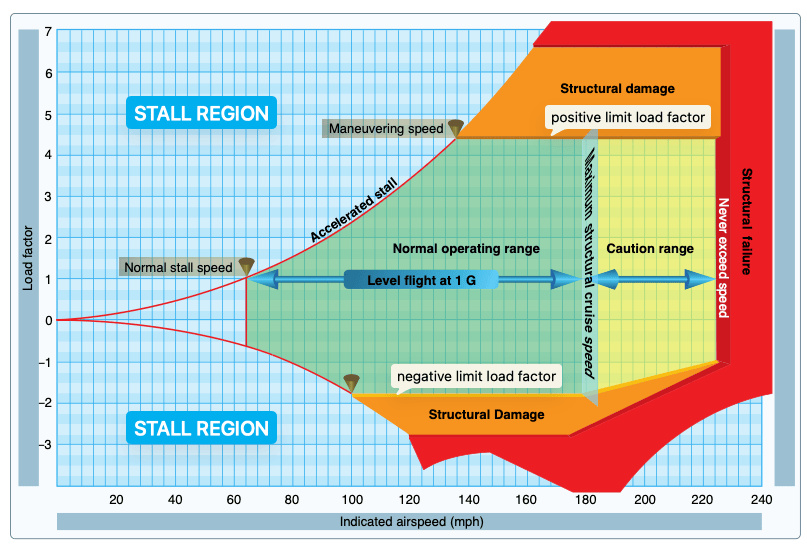
The flight operating strength of an aircraft is presented on a graph whose vertical scale is based on load factor. The diagram is called a Vg diagram—velocity versus G loads or load factor.
Note
Why VA? The reason is because that little “A” stands for Acceleration.
The airplane is designed to exceed its critical angle of attack before it exceeds its design load limit. So, the wing will stall before it is overloaded. The rule applies below the speed of VA.
Take a careful look at where VA is on this chart. If I’m at speeds above VA, I could accelerate the airplane to put loads on it to take it all the way up to that stall line well above loads that the airplane was designed to handle.
VA speed is not present on your airspeed indicator, because it changes. VA speed goes down as the weight of the aircraft goes down. And here’s why: remember, it’s all about acceleration. Smaller, lighter objects are easier to accelerate than larger, heavier objects