Note
We’re going to talk about longitudinal, lateral, and directional stability and their relationship to aircraft design characteristics.
Longitudinal Stability
When we talk about longitudinal stability, we’re talking about the airplane moving from its nose to its tail—the longitudinal axis of the airplane moving up and down. Now what’s sometimes confusing about this is that when it moves on the longitudinal axis, it’s moving around the lateral axis.T hat longitudinal movement around the lateral axis is controlled by the aircraft’s elevators, and the movement is referred to as pitch or pitching.
Note
While the airplane moves on the Longitudinal Axis, it is also moving AROUND the Lateral Axis. The Longitudinal Movement is controlled by the aircraft’s Elevators, refierred to as PITCH.
An important consideration when designing a longitudinally stable airplane is the balance between the center of gravity and the center of pressure of the wing (Center of lift).
The downward force on the tail that balances or stabilizes that longitudinal axis, that’s called the tail-down force. The tail-down force is essential to balance the nose-down pitching moment; that is longitudinal stability.
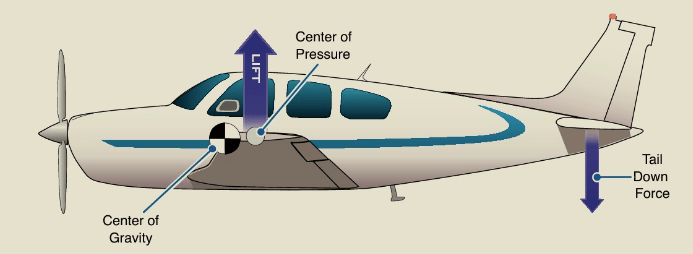
When the CG is within the approved CG range, the airplane not only is controllable, but its longitudinal stability also is satisfactory
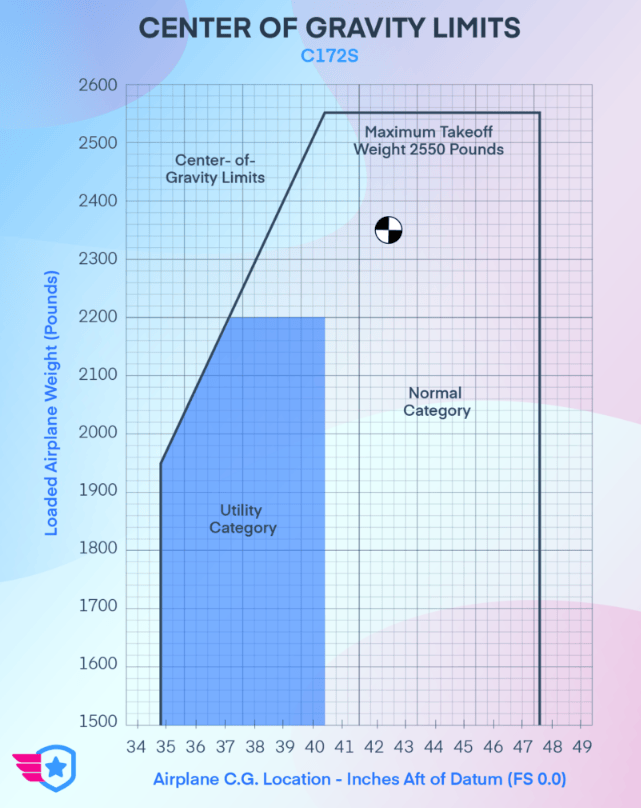
CG Too Far Forward
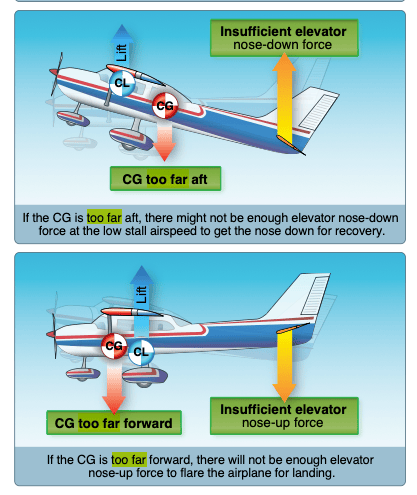
If you load your airplane so the CG is forward of the forward CG limit, it will be too nose heavy. Although this tends to make the airplane seem stable, adverse side effects include longer takeoff distance and higher stalling speeds. The condition gets progressively worse as the CG moves to an extreme forward position. Eventually, stabilator (or elevator) effectiveness will be insufficient to lift the nose when taking off; or during landing, this may cause the nosewheel to strike the runway before the main gear.
CG Too Far Aft
A CG located aft of the approved CG range is even more dangerous than a CG that is too far forward. With an aft CG, the airplane becomes tail heavy and very unstable in pitch, regardless of speed. As a result, you may be unable to recover from a stall or spin.
Lateral Stability
Lateral means side-to-side.The lateral axis, which goes from your wingtip to your wingtip, is moving laterally, but you’re moving around the axis that’s going from your tail to your nose—you’re moving around the longitudinal axis.
There’s a couple of different ways that aircraft maintain their lateral stability:
1. Dihedral
Dihedral Dihedral is the upward angle of the airplane’s wings with respect to the horizontal, which makes the wings appear to form a spread-out V.
Caution
When the airplane is upset laterally, it yaws.
- If I roll to the right, I’m yawing to the left.
- If I roll to the left, I’m yawing to the right.
If I roll to the left and yaw to the right, the lower arm or the lower wing is moving faster through the air. The low wing creates more lift; more lift lifts the wing up and back to level.
That’s the effect of dihedral on lateral stability.
2. Pendulum Effect
On a high-wing airplane like the Cessna 172, the fuselage is below this high-wing structure. The center of gravity is down here in the fuselage area, and it acts like the pendulum on the grandfather clock.
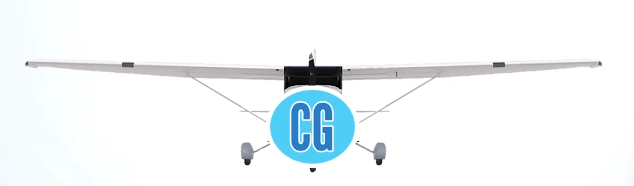
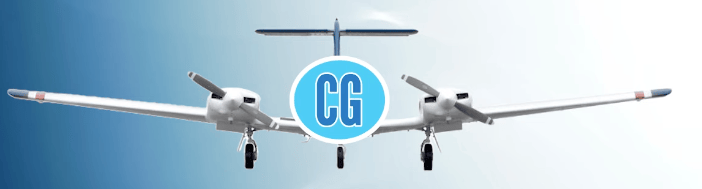
The low-wing airplane’s fuselage is sitting on top of the wings, the center of gravity is up here in the fuselage, and when that center of gravity moves like a pendulum, it tends to keep going. That’s why you see a higher dihedral on these low-wing airplanes.
3. Keel Effect
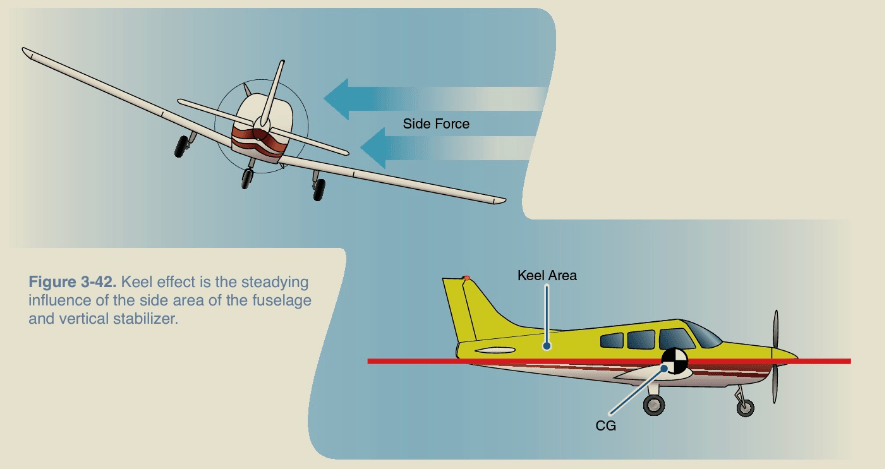
Keel effect is the steadying influence exerted by the side area of the fuselage and vertical stabilizer.
When the airplane moves itself yawing and rolling, that airflow hits that fuselage and, just like the keel on a boat, helps to stabilize it back to where it was.
4. Sweepback
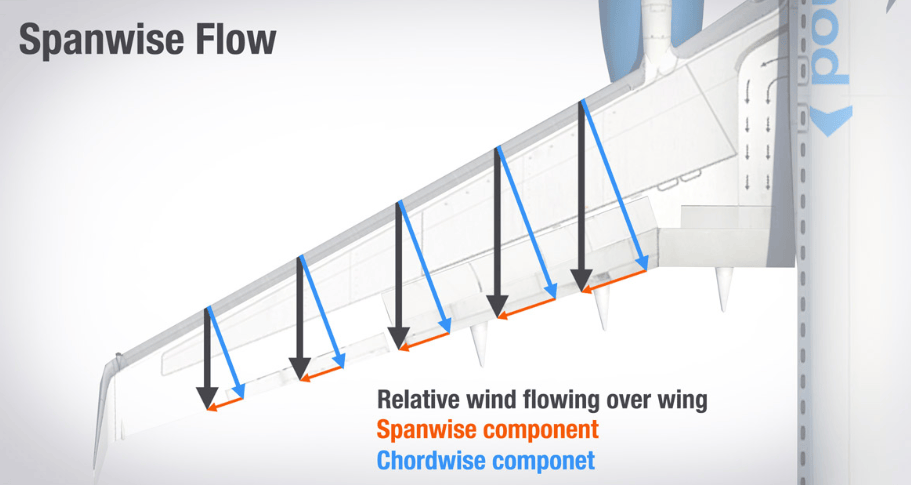
The leading edges of the wings do not form right angles with the longitudinal axis. Instead, the wings are angled backward from the wing root to the wingtips, which is called sweepback.
The design is used primarily to maintain the center of lift aft of the CG and reduce wave drag when operating at speeds at or above the speed of sound.
When a disturbance causes an aircraft with sweepback to slip or drop a wing, the low wing presents its leading edge at an angle that is more perpendicular to the relative airflow. As a result, the low wing acquires more lift, rises, and the aircraft is restored to its original flight attitude, and straighten the airplane if it enters a sideslip.
Directional (Vertical) Stability
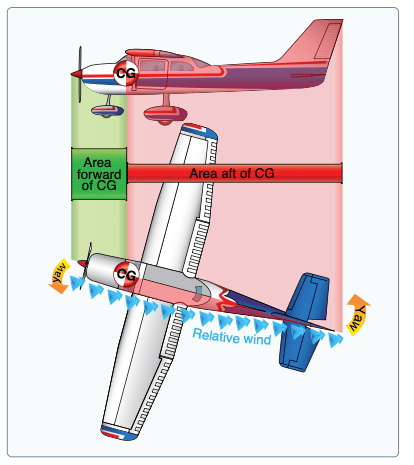
Stability about the vertical axis is called directiona directional stability stability. The primary contributor to directional stability is the vertical tail which causes an airplane in flight to act much like a weather vane.
When this airplane is moved off of center around its vertical axis—that is, when the airplane enters a sideslip—the greater surface area behind the CG helps keep the airplane aligned with the relative wind.