Gyroscopic Principles
Rigidity in Space
DEFINITION:
The gyro spun rapidly remains in the fixed position in which it was originally spinning
Precession
DEFINITION:
Precession is the tilting or turning of a gyro in response to pressure. The reaction to this force occurs in the direction of rotation, approximately 90° ahead of the point where the force was applied.
Sources of Power
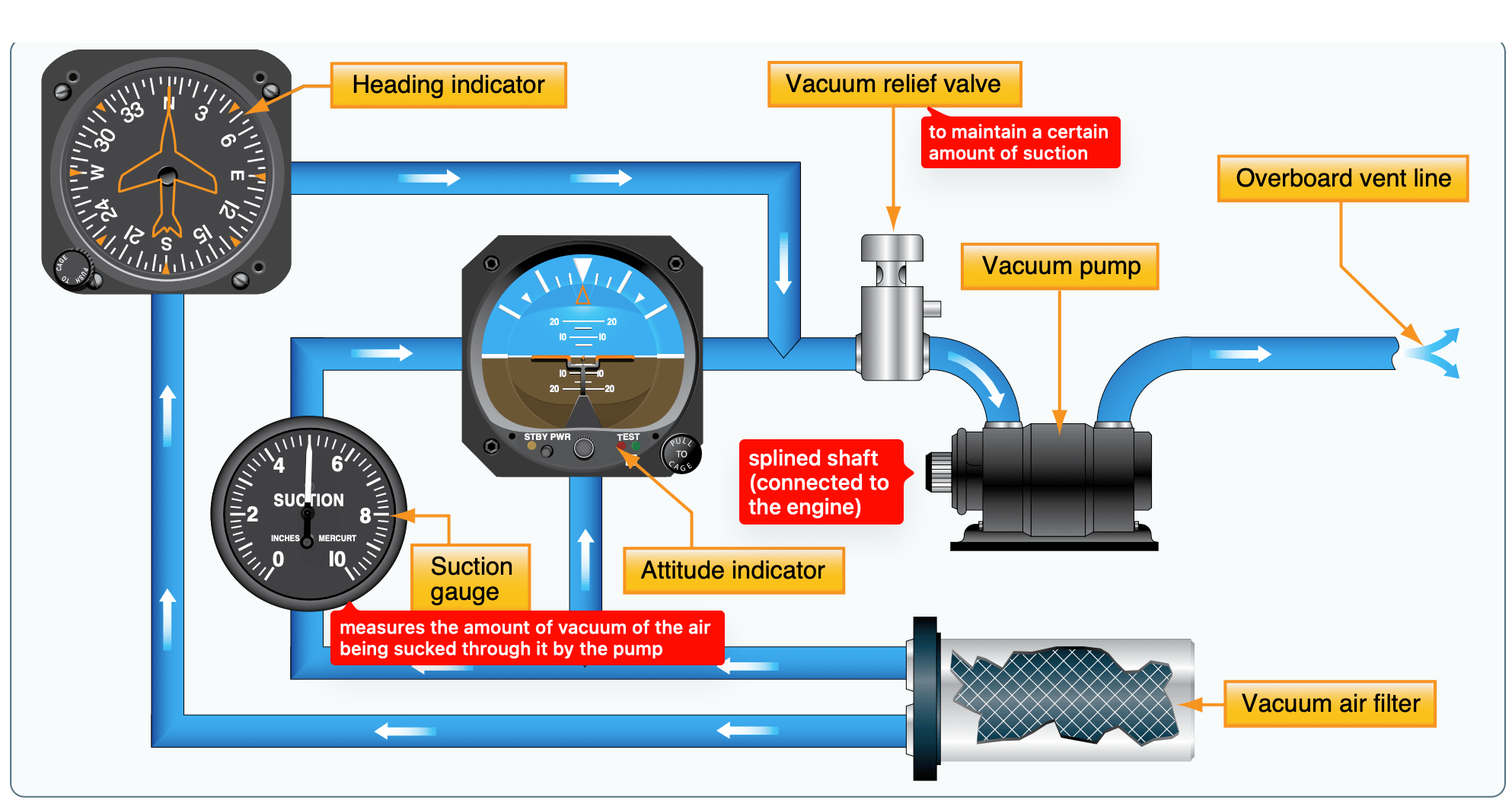
The three primary gyroscopic instruments are powered by two different sources to ensure redundancy in the event of a system failure:
Vacuum (Suction) System
- Instruments:
- Attitude Indicator
- Heading Indicator.
- Mechanism: An engine-driven pump creates a vacuum that pulls filtered air across the gyros, spinning them at high speeds.
- Monitoring: A suction gauge, sometimes referred to as a pressure gauge, and a regulator valve allow the pilot and mechanics to monitor and maintain the correct vacuum levels.
Electrical System
- Instrument: Turn Coordinator.
- Mechanism: Powered by a small electric motor.
- Purpose: This instrument is intentionally powered separately so that if the engine-driven vacuum pump fails, the pilot still has at least one functional gyroscopic instrument to maintain aircraft control.
Turn Coordinator/ Turn-and-slip Indicator
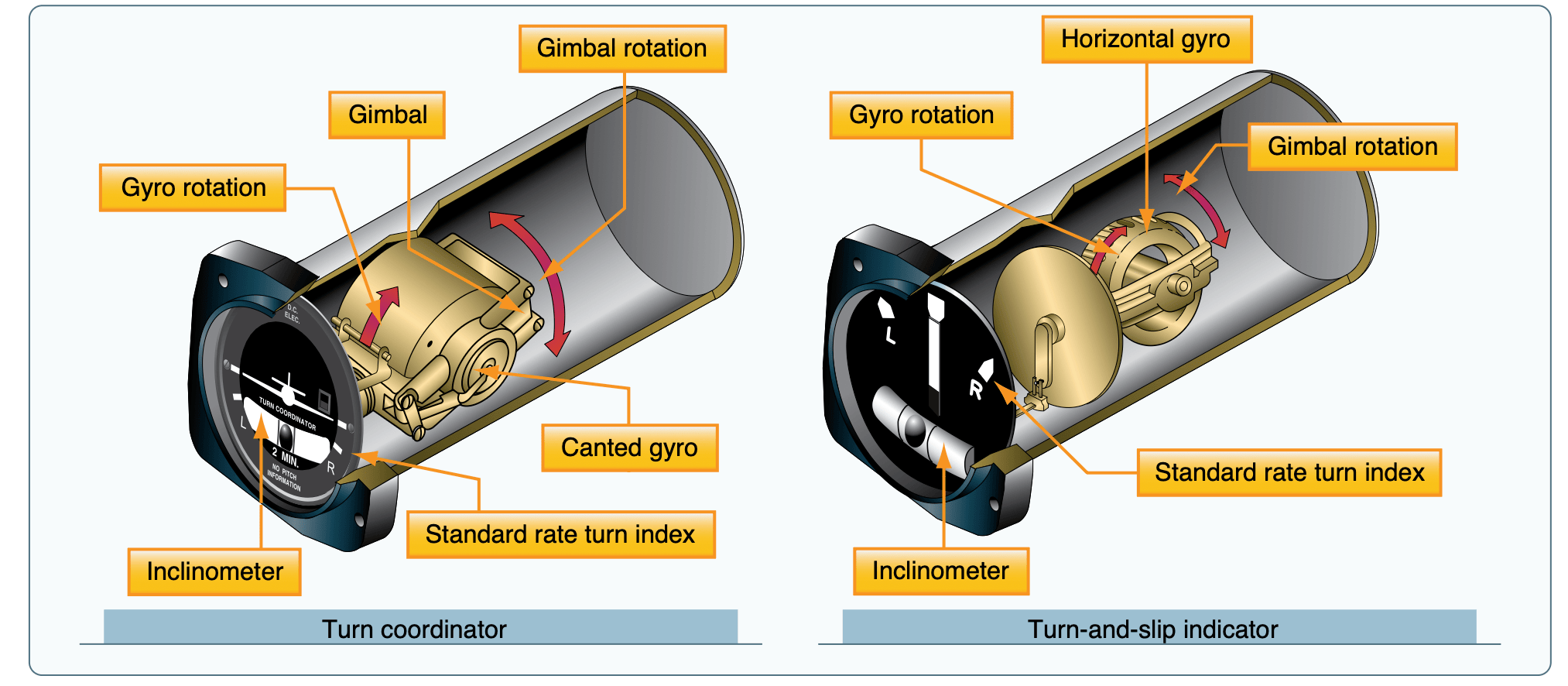
The gyro in the turn and slip indicator is mounted horizontally, and on the turn coordinator, that mounting is canted slightly at about 30 degrees; therefore, its gyro can sense both rate of roll and rate of turn.
A standard-rate turn is defined as a turn rate of 3° per second (2 min/circle)
Caution
The turn coordinator indicates only the rate and direction of turn; it does NOT display a specific angle of bank. It tells us only the rate of turn in degrees per second, and that’s affected by the aircraft’s speed.
If you’re turning slower, at a slower airspeed, the radius of the turn is smaller and it’s more degrees per second.
If the aircraft is traveling faster, it’s a larger radius and it’s fewer degrees per second.
Inclinometer
DEFINITION:
The inclinometer is used to depict aircraft YAW, which is the side-to-side movement of the aircraft’s nose
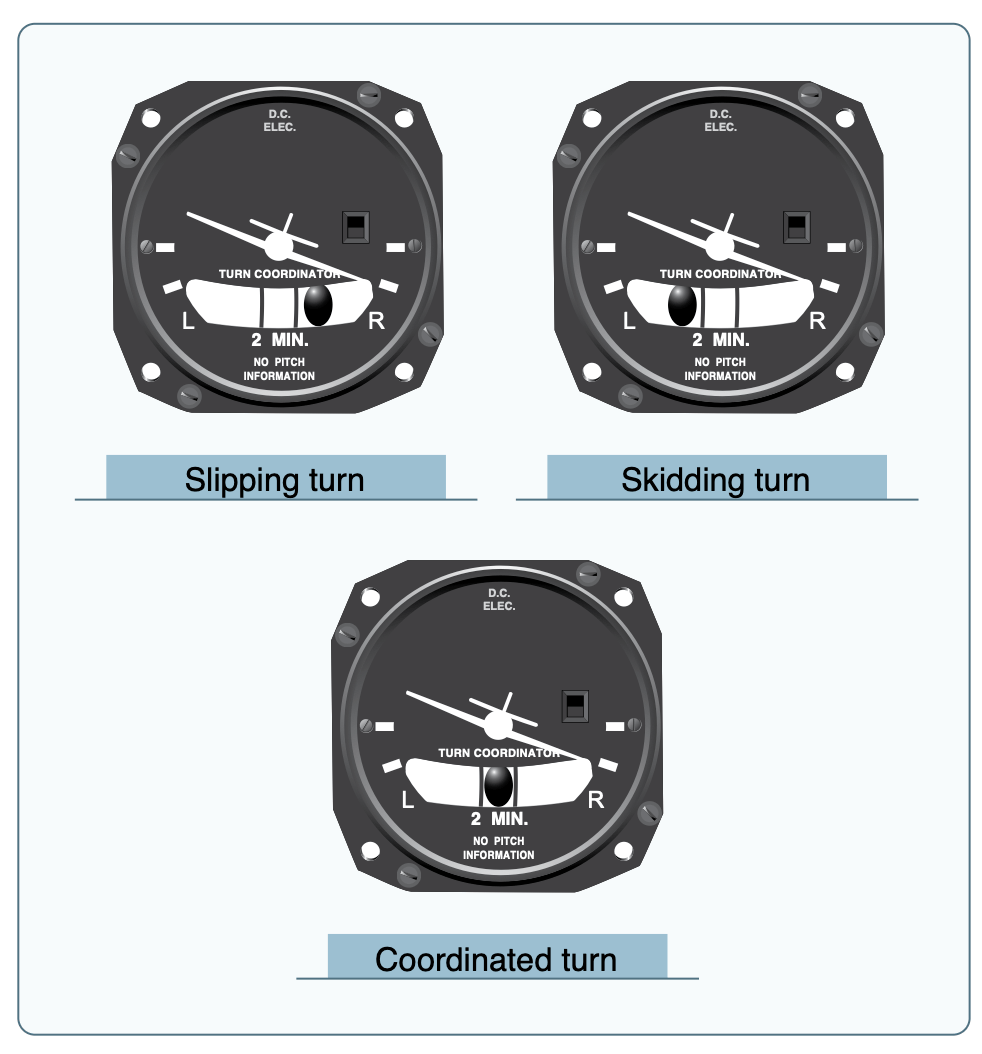
The inclinometer indicates that the nose of the aircraft is inside or outside of the aircraft’s flight path.
- Coordinated Turn
- The longitudinal axis of the aircraft is aligned with its flight path
- The ball is centered.
- Slipping Turn
- Aircraft is outside of the aircraft’s flight path;
- The ball is going inside of the turn.
- Skidding Turn
- Aircraft is inside of the aicraft’s flight path;
- The ball is going outside of the turn.
Attitude Indicator
DEFINITION:
The attitude indicator uses an artificial horizon and miniature airplane to depict the position of your airplane in relation to the true horizon.
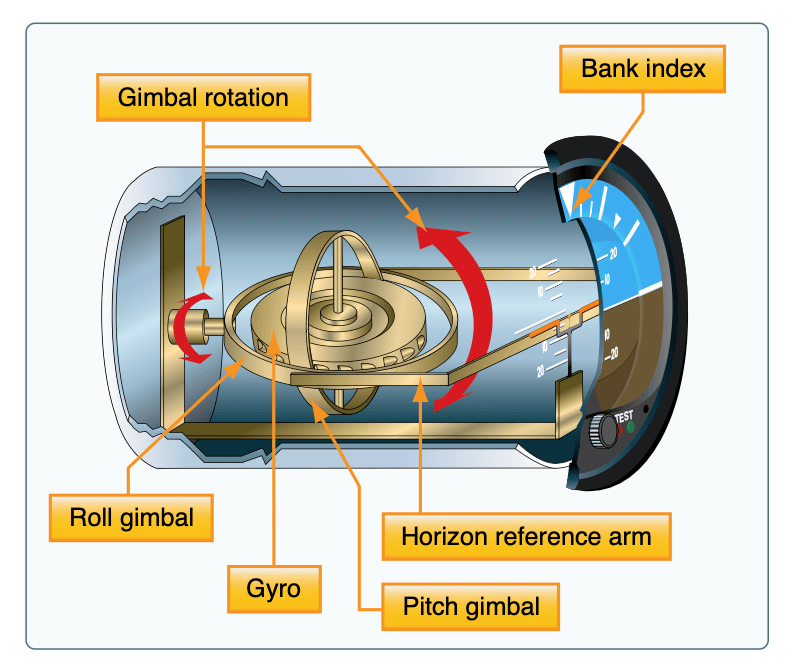
The attitude indicator displays a picture of the attitude of the aircraft with the help of three gimbals around a fast-spinning gyro.
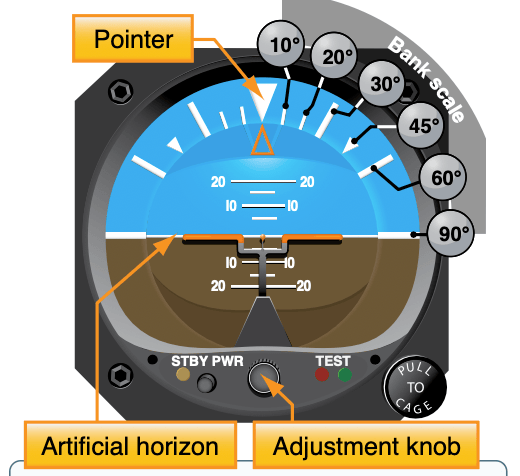
Note
Attitude Indicator is the only instrument in the pilot’s cockpit that gives the pilot two pieces of information—pitch and bank.
Caution
Attitude Indicator does NOT indicate if the aircraft is climbing or descending; it is the Vertical Speed Indicator (VSI) does.
Mirco-Electronic Mechanical System (MEMS)
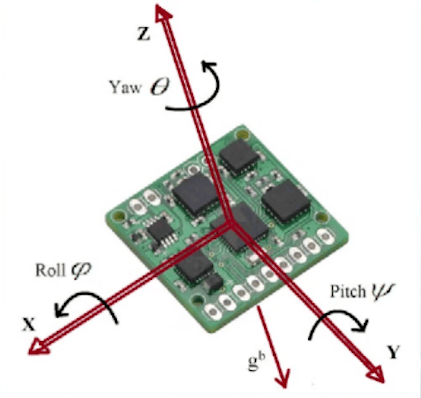
A MEMS (Micro-Electro-Mechanical Systems) Gyroscope is a compact, highly reliable device used to measure angular velocity or maintain orientation in a wide range of applications. Unlike traditional gyroscopes, MEMS technology combines mechanical and electrical components at a microscopic scale, resulting in a smaller, more cost-effective solution without compromising on performance.
Heading Indicator (Directional Gyro)
DEFINITION:
**The heading indicator senses airplane movement and displays heading based on a 360° azimuth, with the final zero omitted. **
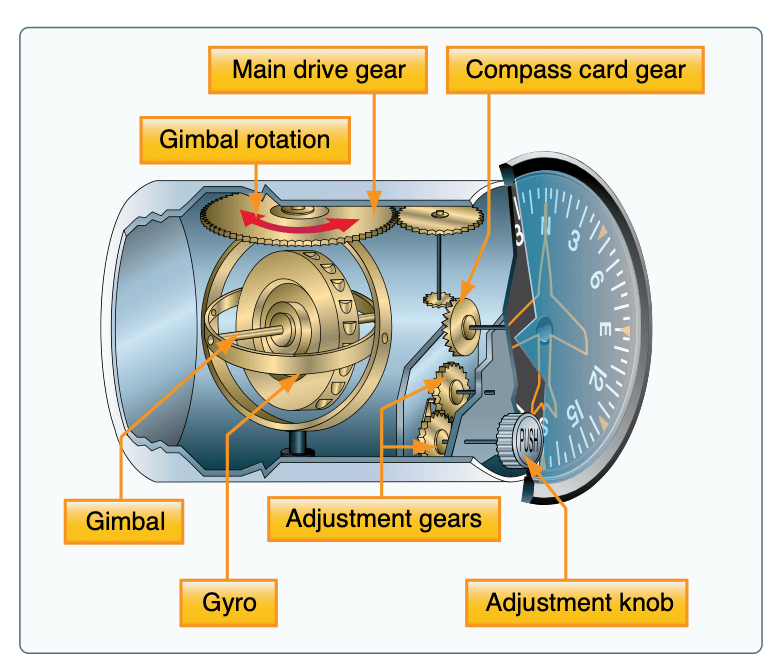
The air-driven heading indicator is NOT automatically tuned to magnetic north. For the heading indicator to display the correct heading, you must align it with the magnetic compass before flight.
However, precession can cause the selected heading to drift from the set value. For this reason, you must regularly, at approximately 15-minutes intervals, align the indicator with the magnetic compass.
Flux Gate Compass System
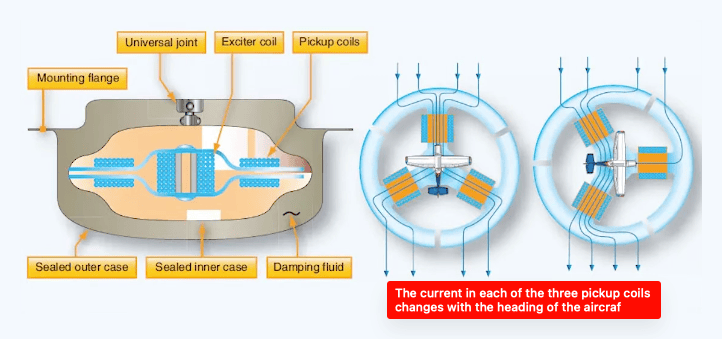
The fluxgate magnetometer senses the earth’s flux lines and updating the heading indicator, which will automatically align the compass to the magnetic north.
Note
A coil wound around the iron spacer in the center of the frame has 400 Hz alternating current (AC) flowing through it. A coil wound around the iron spacer in the center of the frame has 400 Hz alternating current (AC) flowing through it.
Read more at fluxgate magnetometer