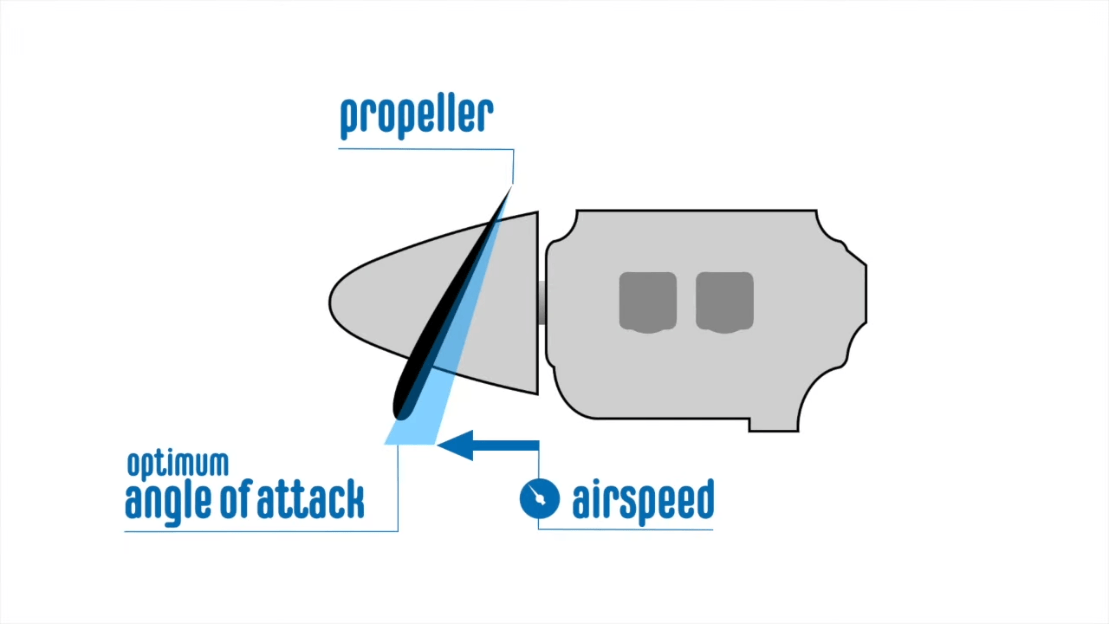
Fixed-Pitch Propeller
Most training aeroplanes have a fixed-pitch propeller that is designed to operate most efficiently only at one particular airspeed and engine RPM combination. The propeller blade has the optimum angle of attack at this airspeed. However, as the airspeed increases, the angle of attack becomes smaller than optimum, and as the airspeed decreases, the angle of attack becomes greater than optimum.
Constant Speed Propeller
The constant speed propeller’s blade angle can be changed from fine to coarse, or any position in between. On modern aeroplanes, this is known as a constant-speed propeller. It allows the propeller blade to maintain the optimum angle of attack as the airspeed increases and decreases. The main benefit of the variable-pitch propeller is that it provides peak performance at every phase of flight, from takeoff to landing. The pilot can select the RPM that provides the most suitable power for any situation. This improves fuel efficiency and reduces strain on the engine. ### How it works?
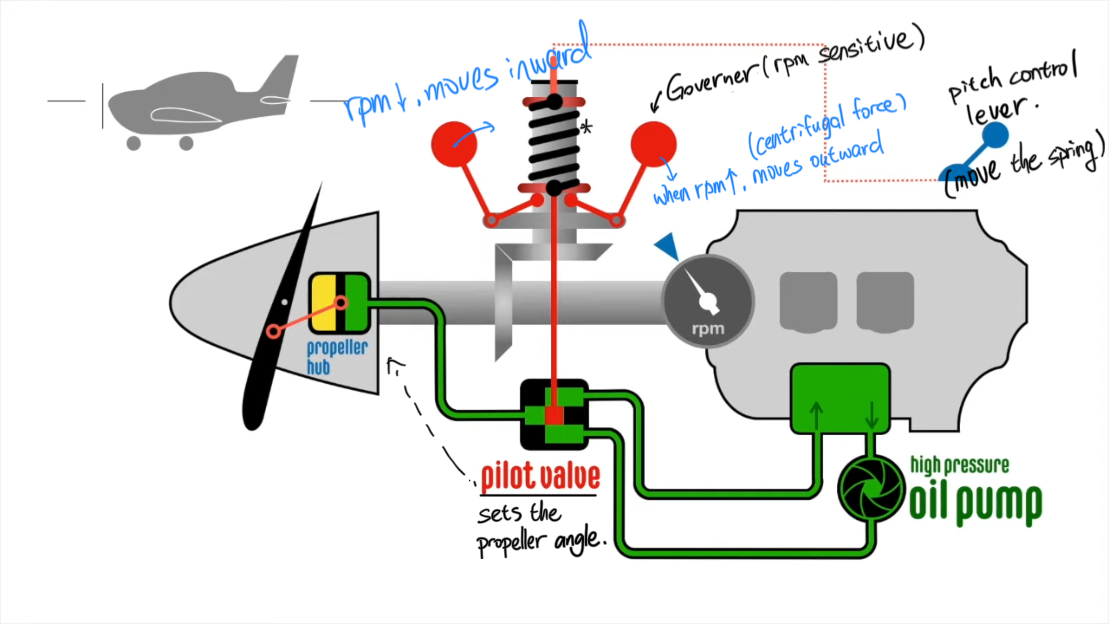
The blade angle-changing mechanism is operated hydraulically with help from a device called the governor. The governor is driven by the engine crankshaft and consists of rotating flyweights. The governor forms part of what’s called the constant-speed unit. The governor flyweights are engine RPM sensitive, so as the engine RPM increases, the centrifugal force moves the flyweights outwards, and as the engine RPM decreases, the flyweights move inwards.
The pilot can control how much the flyweights move through a blue lever called the propeller pitch control. This lever sets tension in a spring attached to the flyweights. It allows the pilot to request a target RPM, which the constant-speed unit will automatically try to keep constant in flight. The governor flyweights are connected to the pilot valve. This valve acts like a gate that directs oil to or from the propeller hub, which in turn sets the required propeller blade angle.
Scenarios
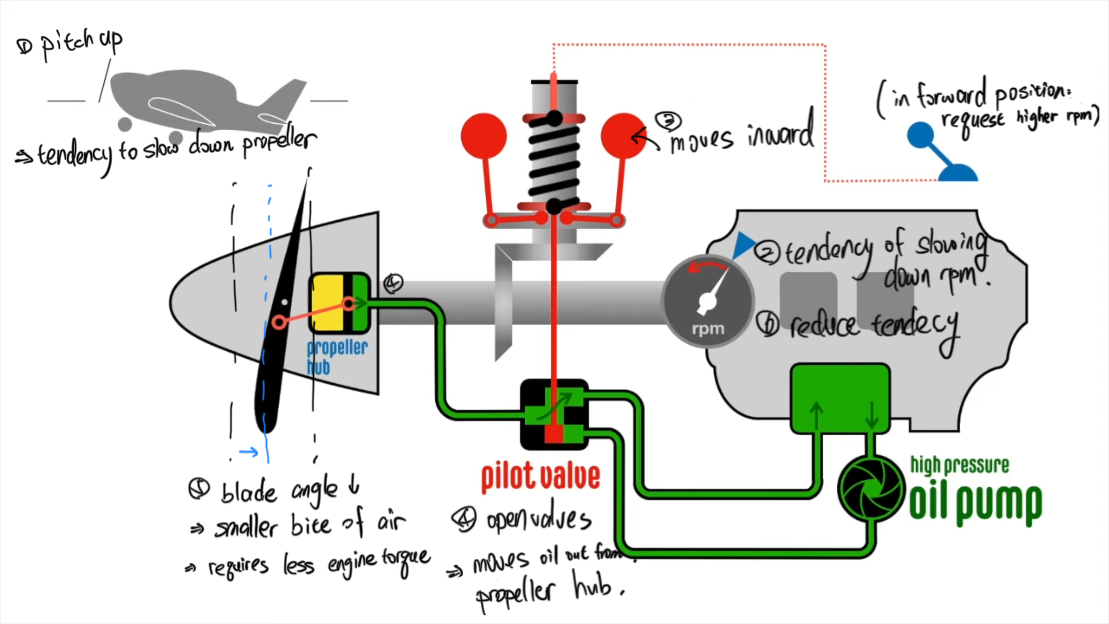
- Pitch Up
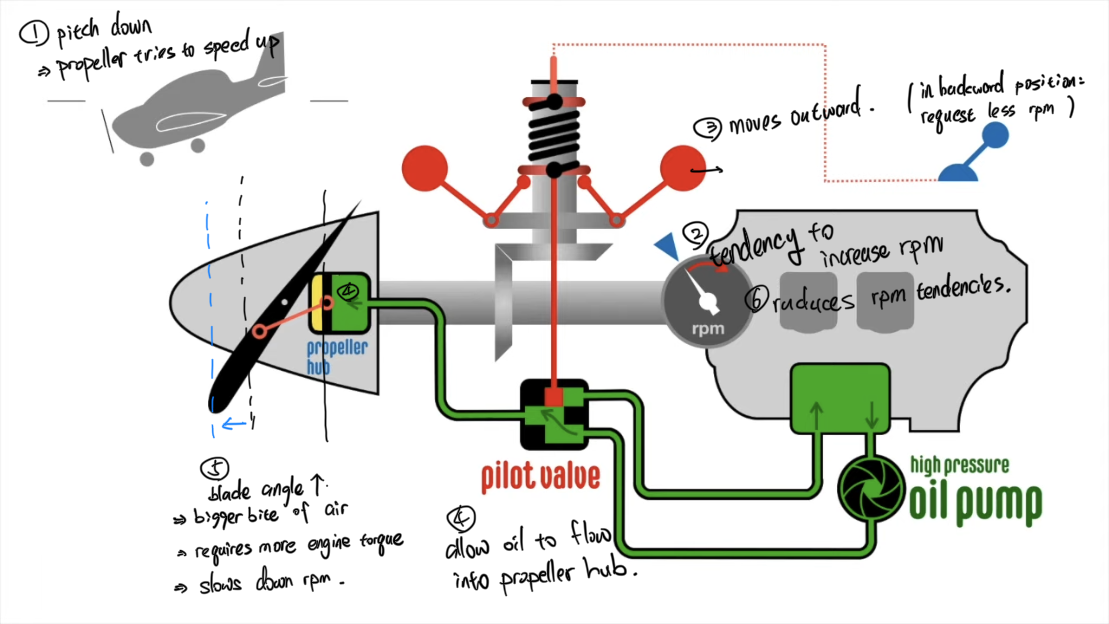
- pitch down