Types of Aviation Weather Information
The FAA has identified three distinct types of weather information available to pilots and operators: Observations (raw sensor/human data), Analyses (interpreted current conditions), and Forecasts (predicted future weather).
- Observation
- Aviation Routine Weather Report (METARS)
- Radar Summary Chart
- Pilot Reports (PIREPs)
- In-Flight Weather Advisories (AIRMETs & SIGMETs)
- Analyses
- Surface Analysis Chart
- Forecasts
- Terminal Aerodrome Forecast (TAF)
- Meteorological Impact Statements (MIS)
- Prognostic Charts (Prog Charts)
- Convective Outlook
- Wind and Temperature Aloft (FB)
We will be talking about some of the graphic reports in this section. Printed reports are further introduced in Weather Services (Printed Reports).
Caution
- The following classification is based on Aviation Weather Handbook 2024 (FAA-H-8083-28A). Some of the data (e.g. FLs) may vary, it is advised to perform careful validation.
- For detailed SIGWX guidelines, please refer to Guidelines for interpreting World Area Forecast Centre T+24 Significant Weather forecasts V.2.01
- Complete Graphic Forecasts Help can be found at https://aviationweather.gov/gfa/help/
Surface Analysis Chart
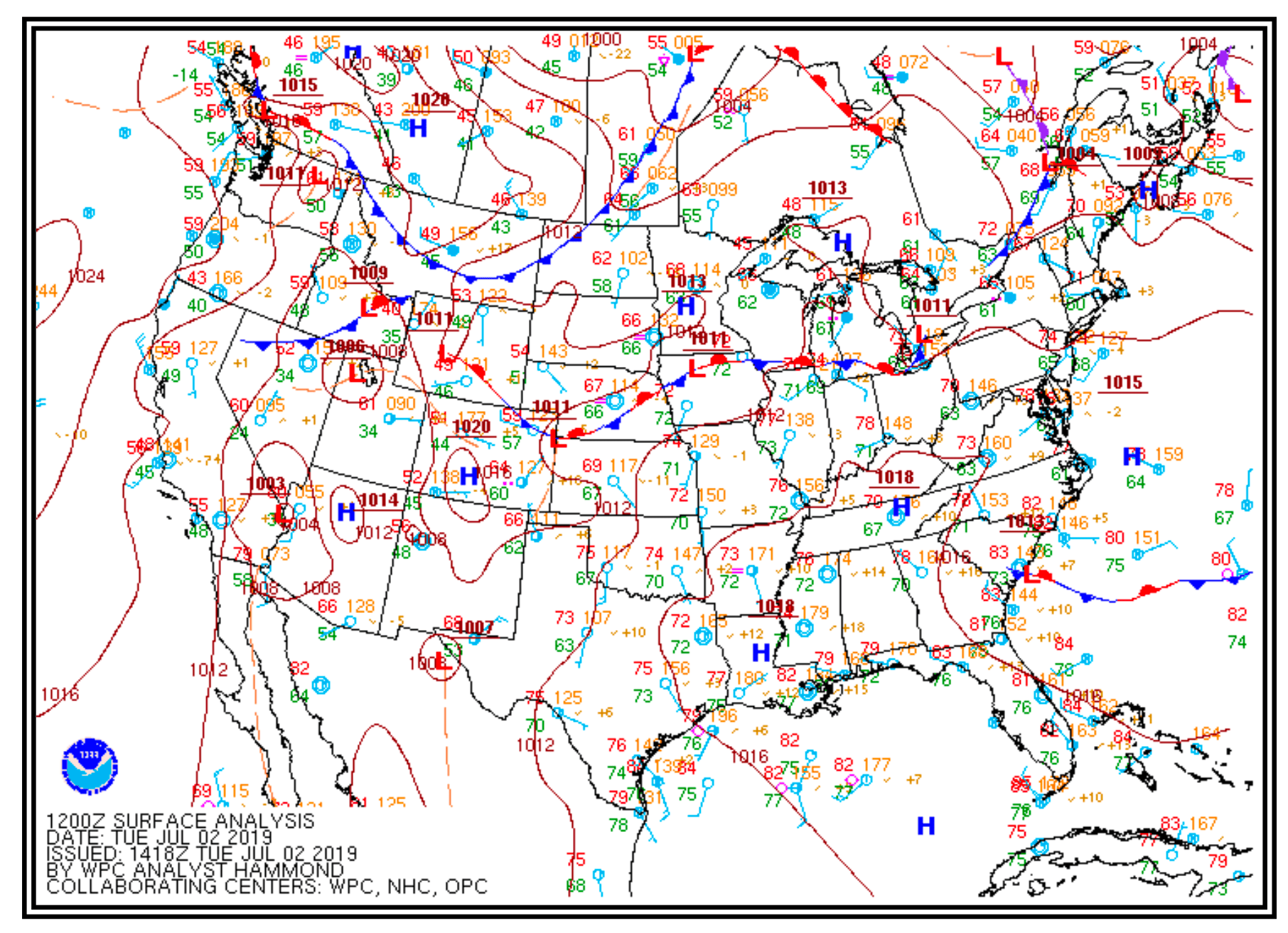
- Shows weather conditions as of the valid time shown on the chart.
- Includes locations of high and low pressure systems and associated fronts.
- Issued every 3 hours, eight times daily (0000Z, 0300Z, 0600Z, 0900Z, 1200Z, 1500Z, 1800Z, 2100Z).
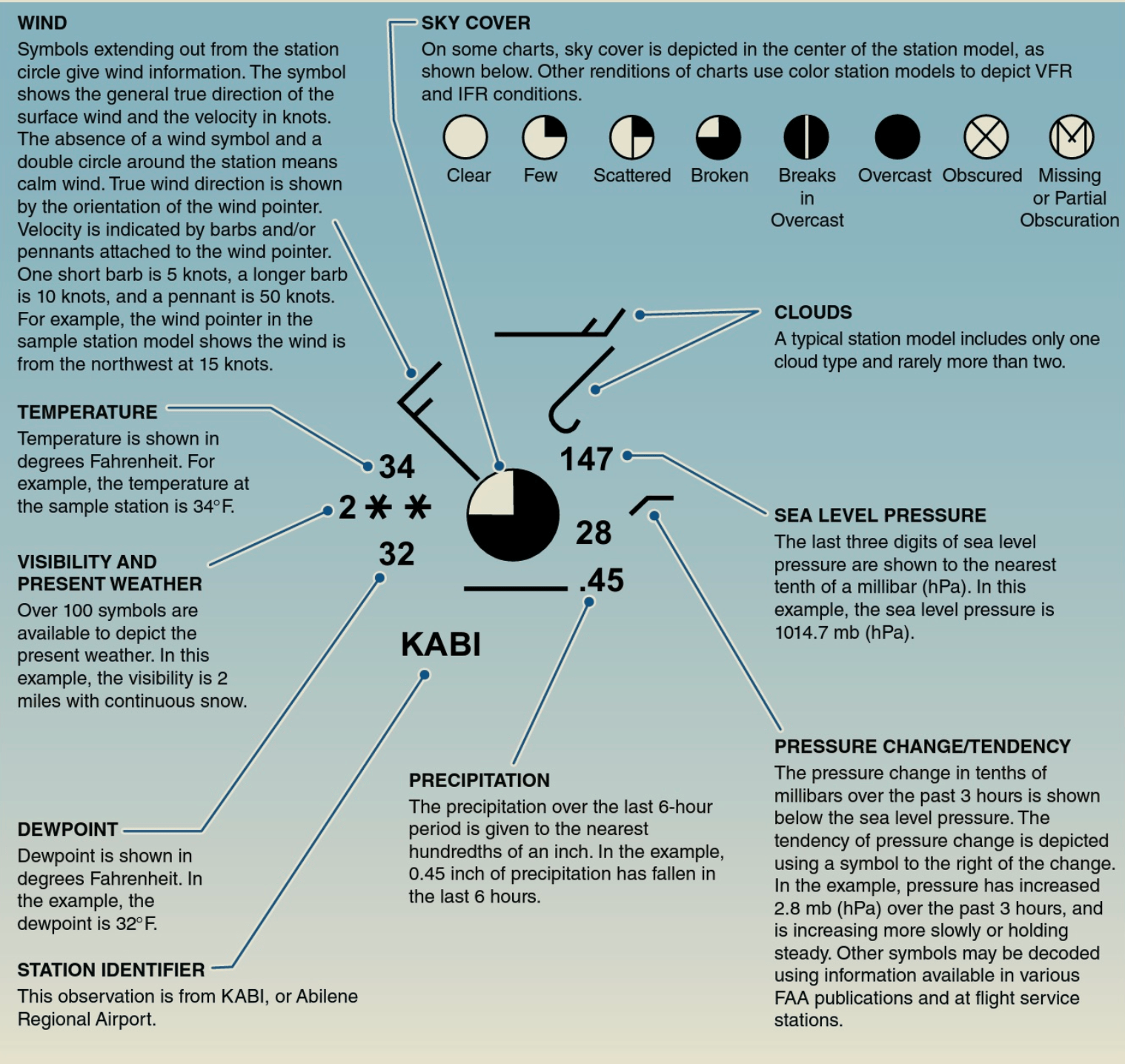
- Provides surface weather observations for a large number of reporting points (station model).
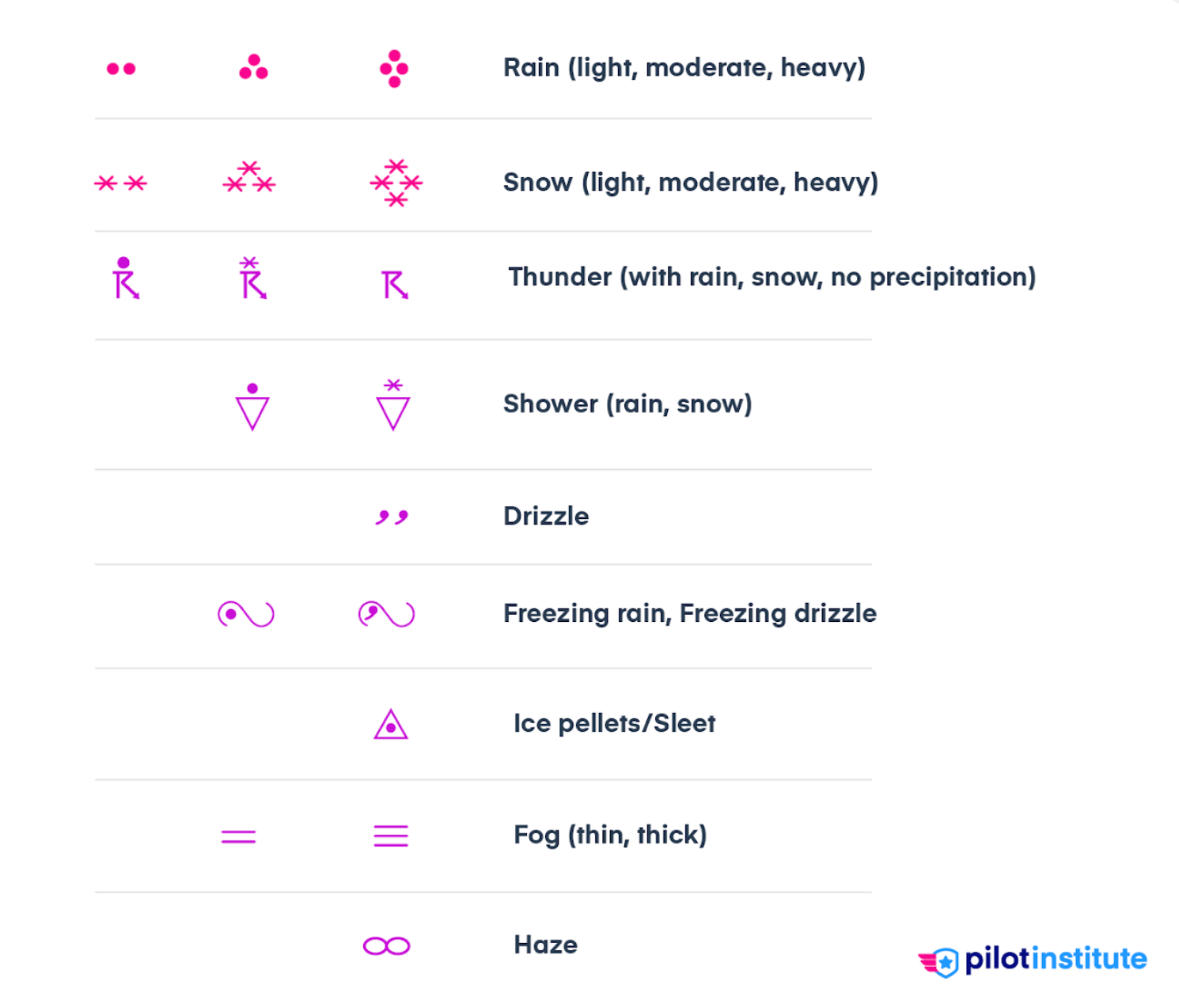
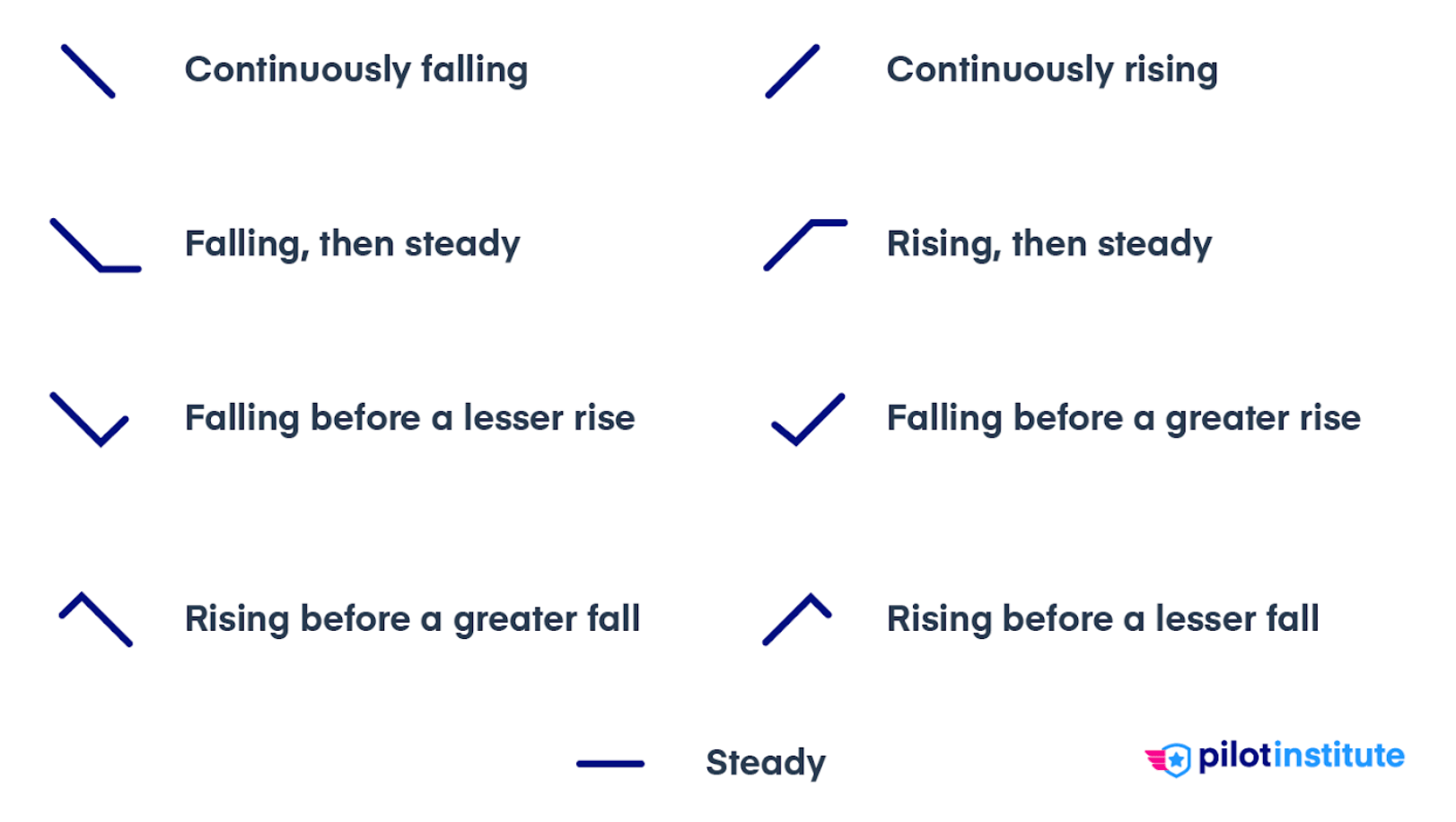
Significant Weather (SIGWX) & Prognostic (Prog) Chart
Significant weather charts are issued by World Area Forecast Centers displaying cloud, turbulence, jet stream, tropical cyclone, and volcano forecast information.
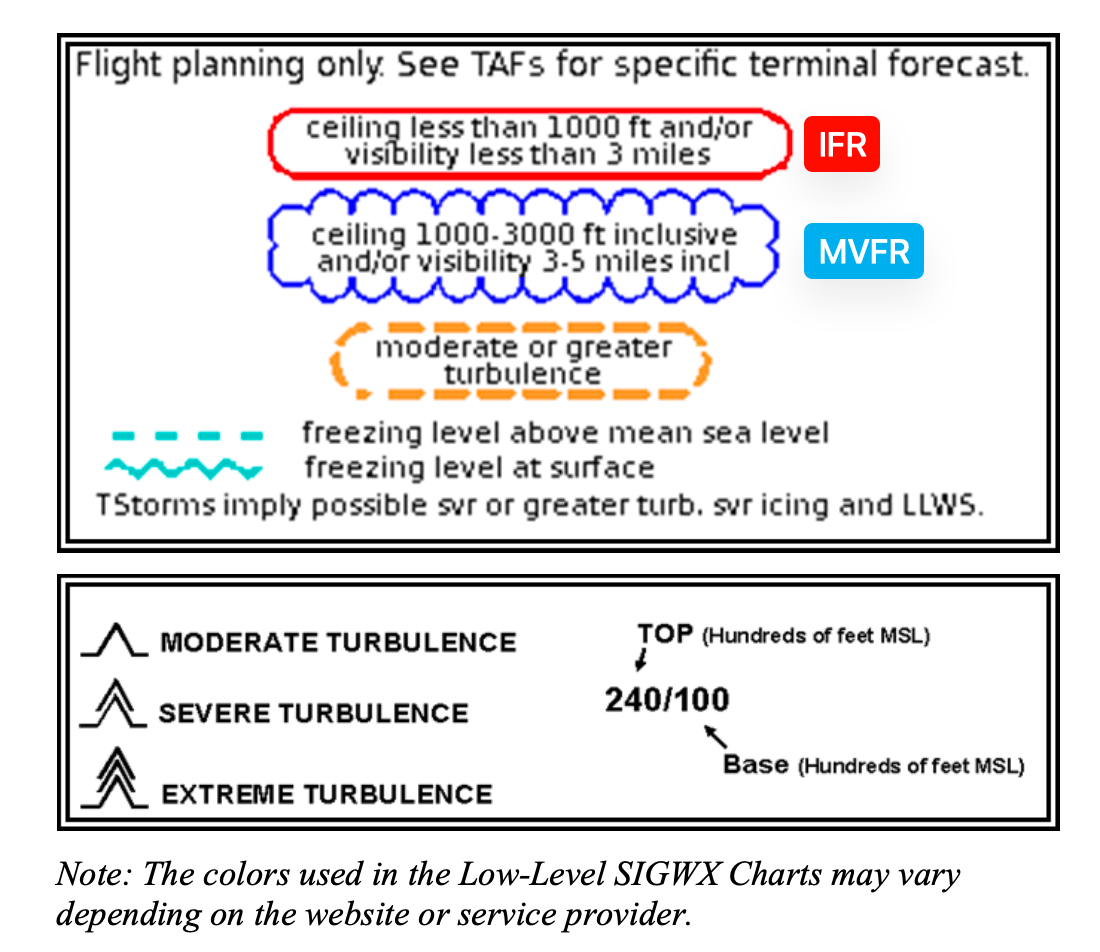
Low-Level Significant Weather Prog Charts (LLSWPC)
- Covers the conterminous United States (CONUS) and the coastal waters, depicting a “snapshot” of weather expected at the specified valid time.
- Provides information from the surface to FL240 (400 mbs: pressure level of 400 millibars).
- Issuance:
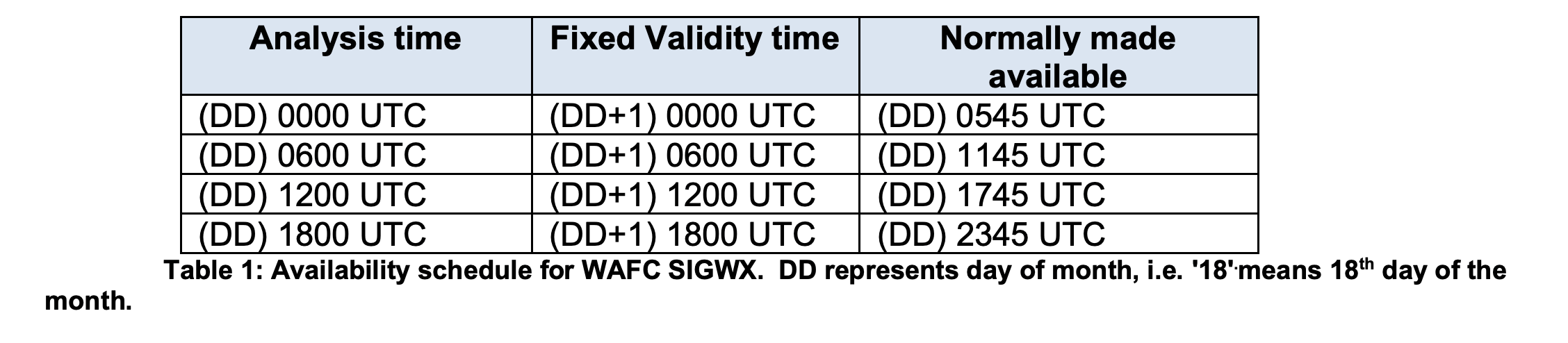
- 4 times per day (0000, 0600, 1200, 1800).
- WAFC SIGWX forecasts are 24-hour forecasts. That means they represent the expected weather 24 hours after the time of observation/analysis.
- Per ICAO Doc 8896, WAFC SIGWX forecasts are ‘usable’ for a period of time extending from 3 hours before to 3 hours after the stated ‘fixed’ validity time.
- Altitudes from the surface to 17,999’ are referenced using MSL altitudes.
- Altitudes from 18,000’ to FL240 are referenced using pressure altitude.
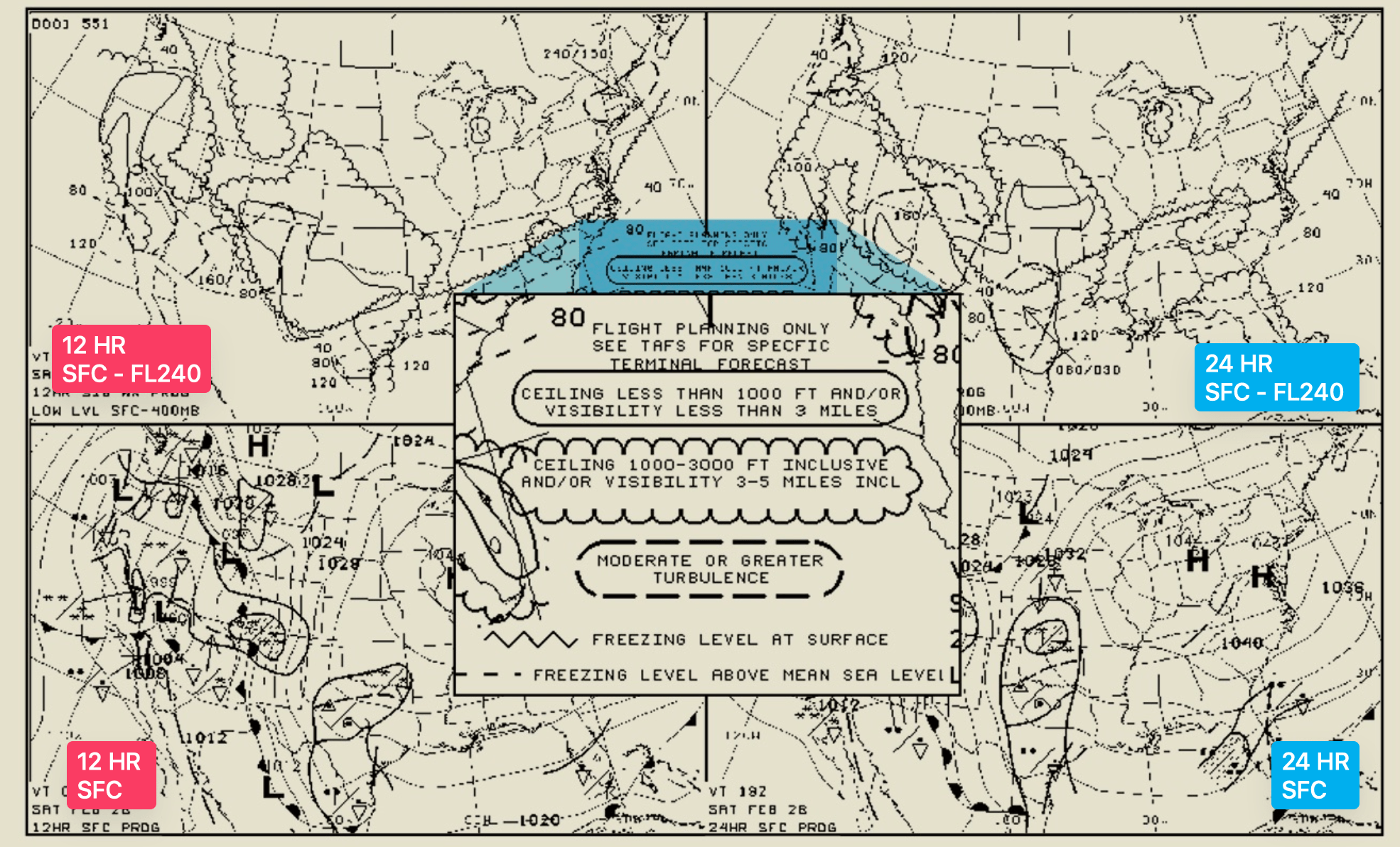
- Provided in two forecasts in 4 panels:
- Top: Surface to FL240 (400MB); 12/24 hour.
- Bottom: Surface; 12/24 hour.
- Contents:
- Flying Categories: IFR, MVFR (Marginal Visual Flight Rules), VFR NOT DEPICTED.
- Turbulence.
- Freezing Levels.
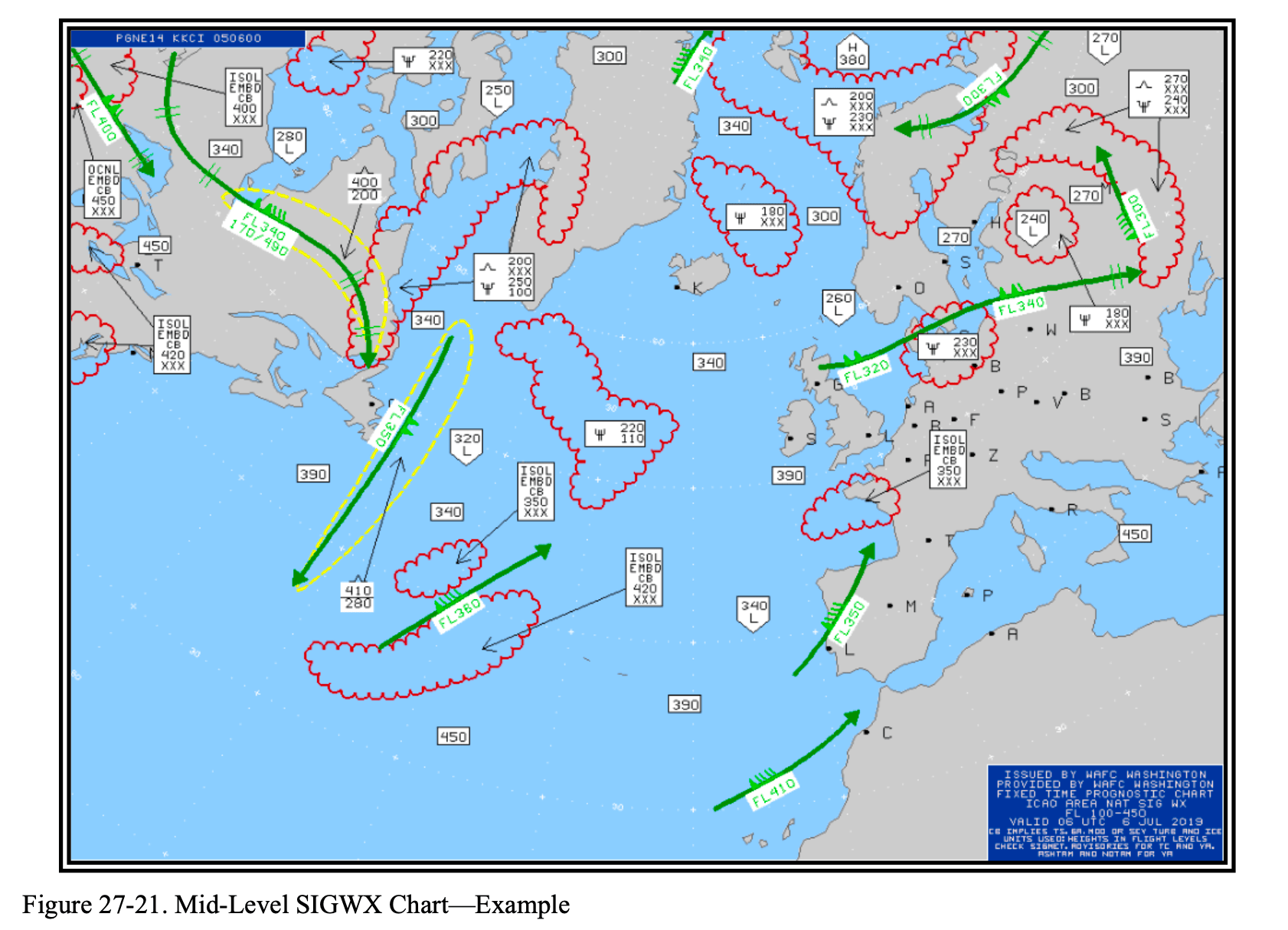
Mid-Level Significant Weather (SIGWX) Charts
- Provides a forecast of significant en route weather phenomena over a range of FLs from 10,000 ft MSL to FL450.
- Issuance: 4 times daily.
- Content: Non-Convective Clouds with Moderate or Severe Icing and/or Moderate or Severe Turbulence.
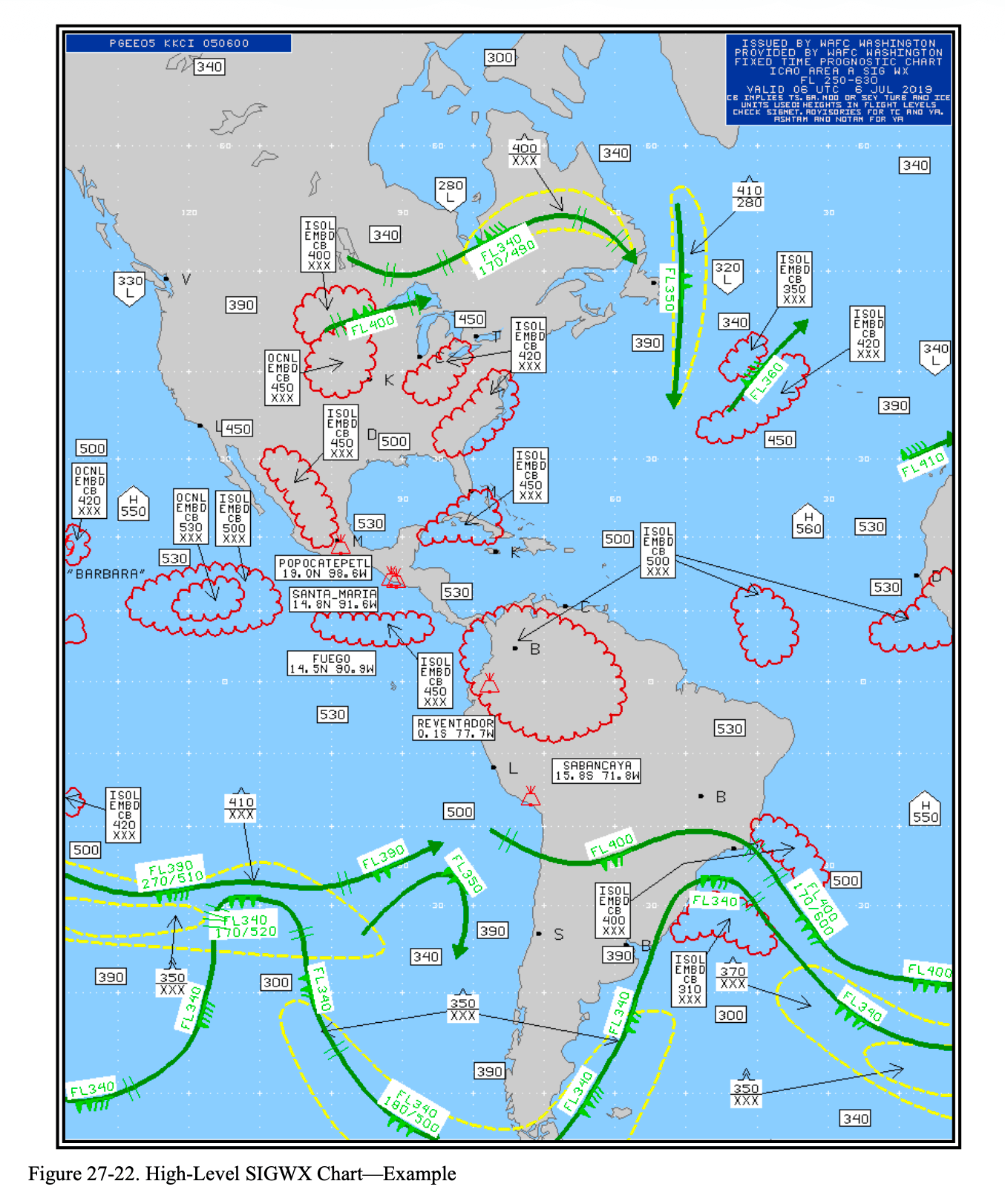
High-Level Significant Weather Prog Charts (HLSWPC)
- HLSWPC is a day 1 forecast of significant weather in the CONUS from FL250 to FL630.
- Provided for the en route portion of international flights.
- Issuance: 4 times daily.
- Contents:
- Thunderstorms and Cumulonimbus Clouds (CB).
- Moderate or Severe Turbulence.
- Moderate or Severe Icing.
- Jet Streams.
- Tropopause Heights.
- Tropical Cyclones.
- Volcanic Eruption Sites.
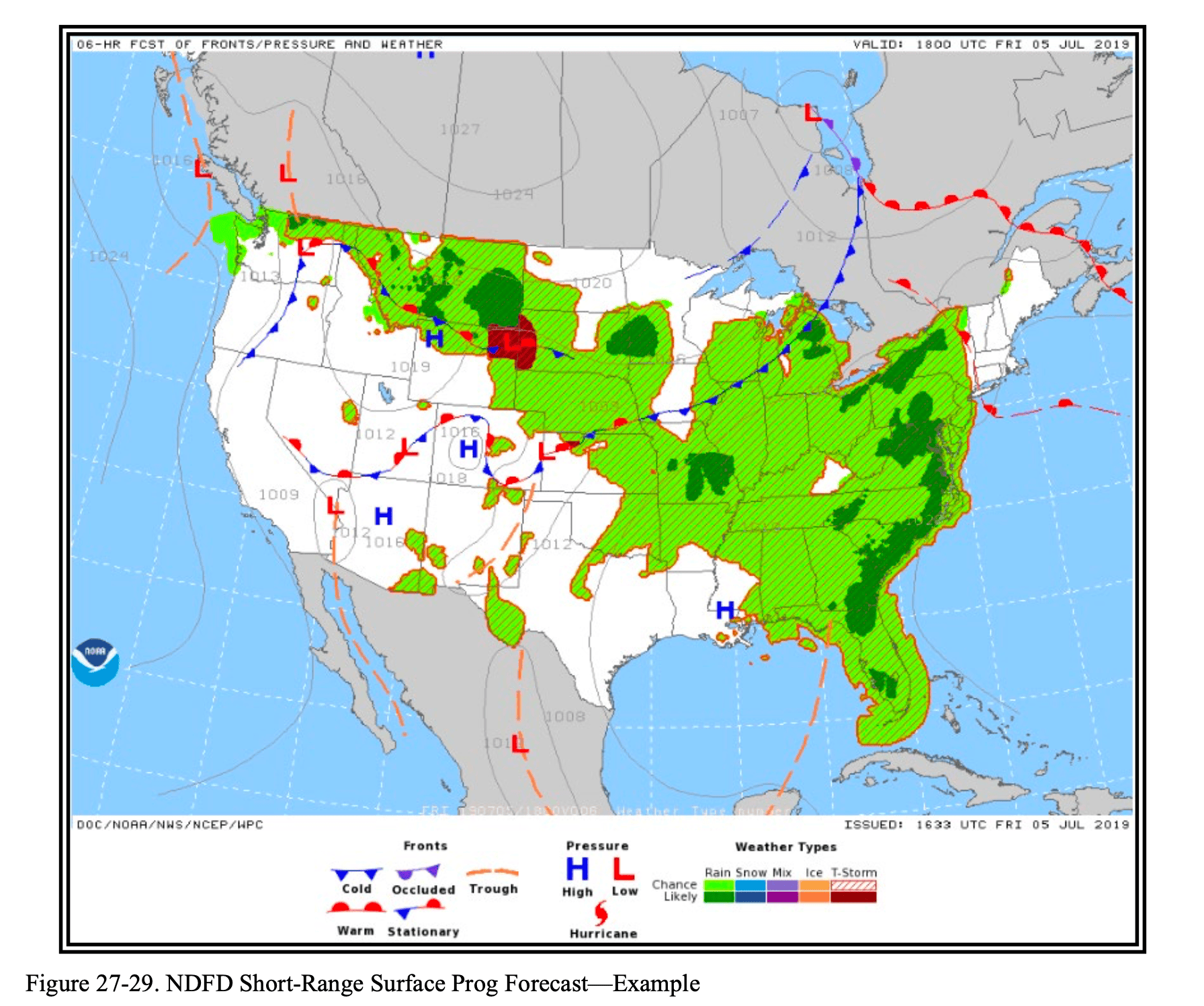
Short-Range Surface Prognostic (Prog) Charts
- Combines WPC forecasts of fronts, isobars, and high/low pressure systems with the NWS’ National Digital Forecast Database (NDFD) digital forecasts.
- Short-range surface prognostic (prog) charts focus on predicting pressure systems, fronts, and precipitation at the surface, while Low-Level Significant Weather (SIGWX) charts forecast specific aviation hazards.
- Contents:
- Precipitation.
- Pressure.
- Fronts.
- Squall Lines.
Convective Outlook Chart (AC)
Caution
- The following risk is referred to NOAA’s newest display changes, which may vary from your textbook.
- Conditional Intensity Information
- Changes to SPC Day 1, 2, and 3 Convective Outlook Probabilities
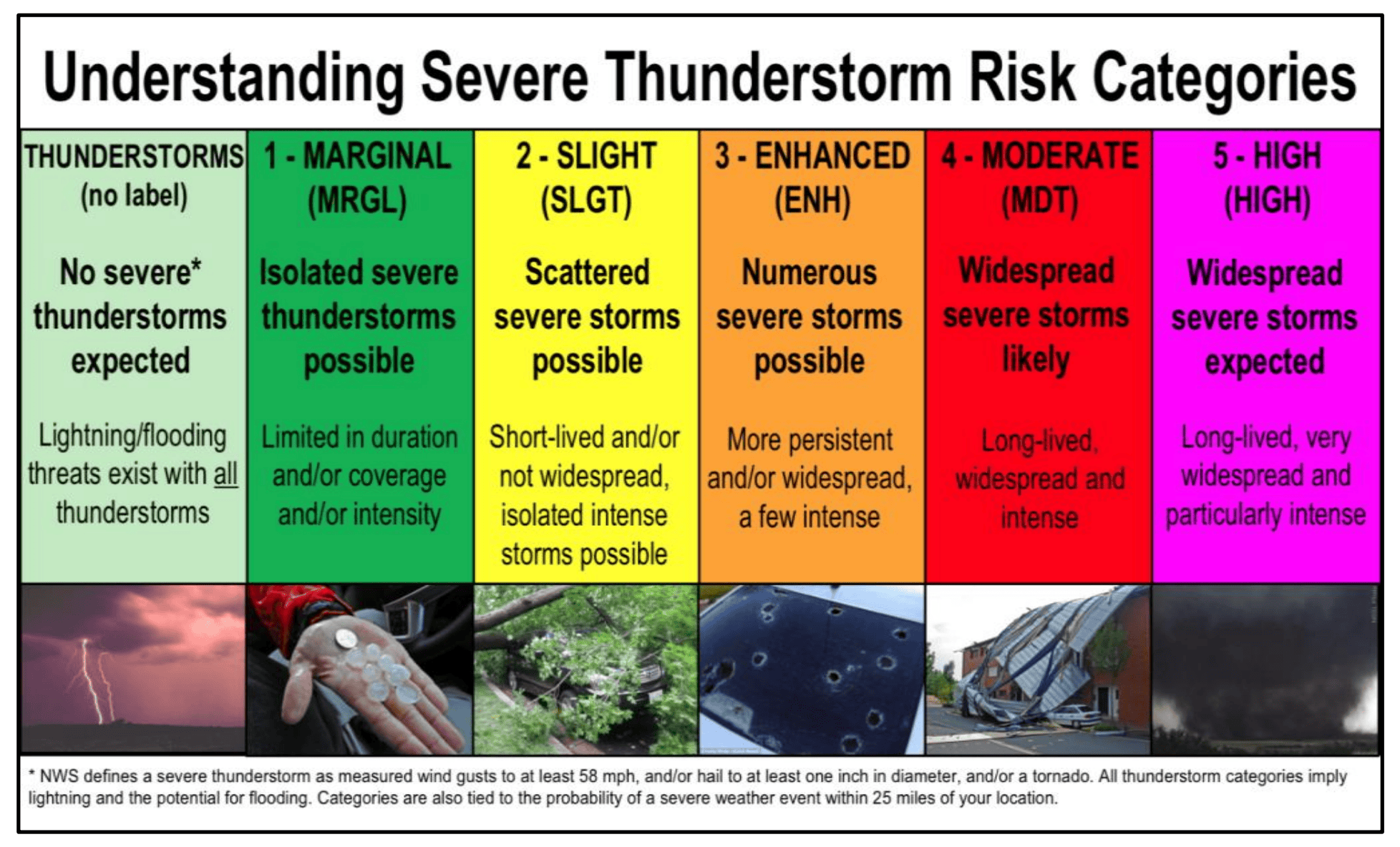
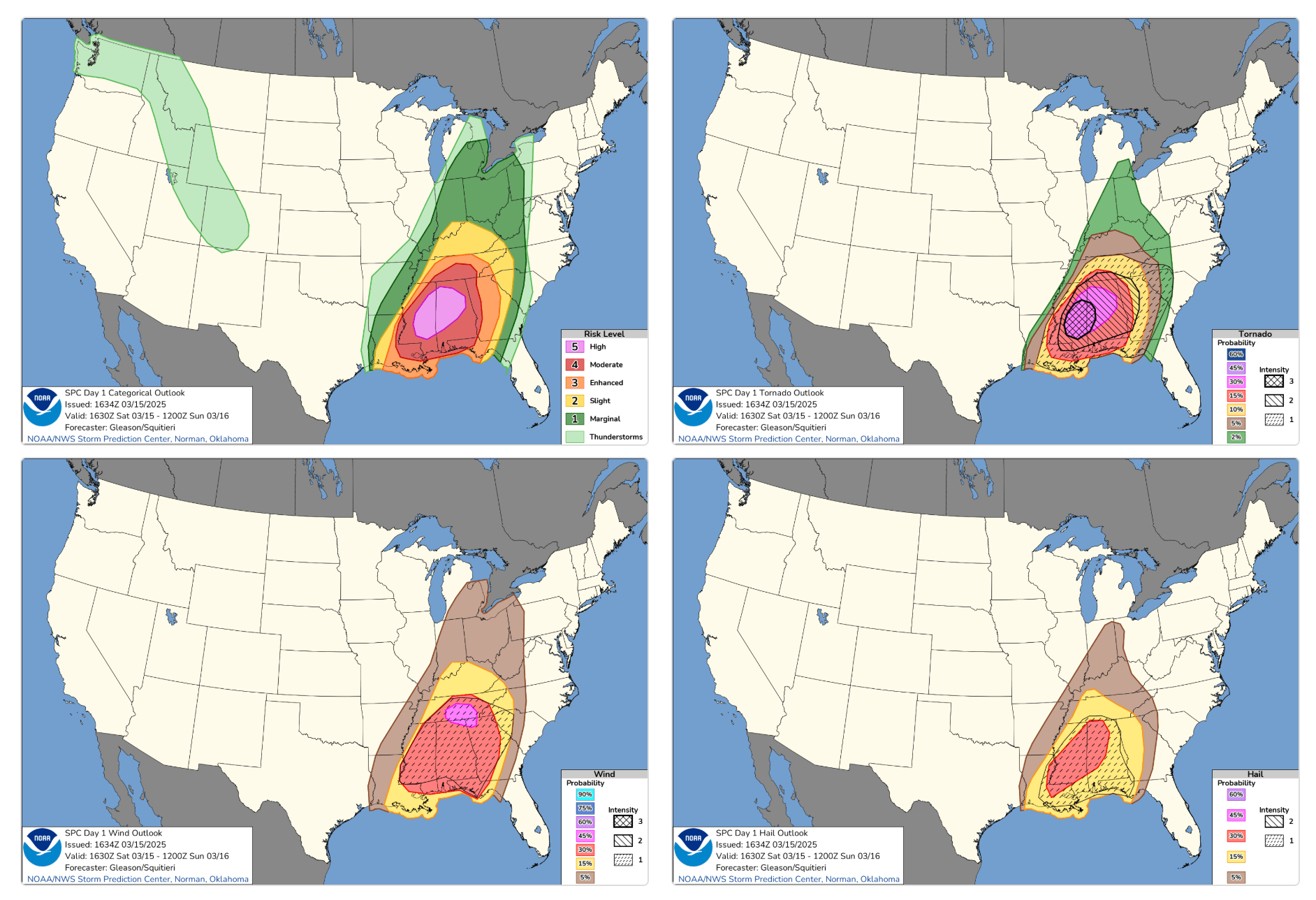
- A Convective Outlook (AC) delineates areas forecast to have thunderstorms.
- Contains 2 panels: Day 1 (24-hour) on the left; Day 2 (48-hour) on the right.
- Issued as required.
- Levels of Risks: - TSTM (light green) non-severe.
- 1-MRGL (dark green).
- 2-SLGT (yellow).
- 3-ENH (orange).
- 4-MDT (red).
- 5-HIGH (magenta).